
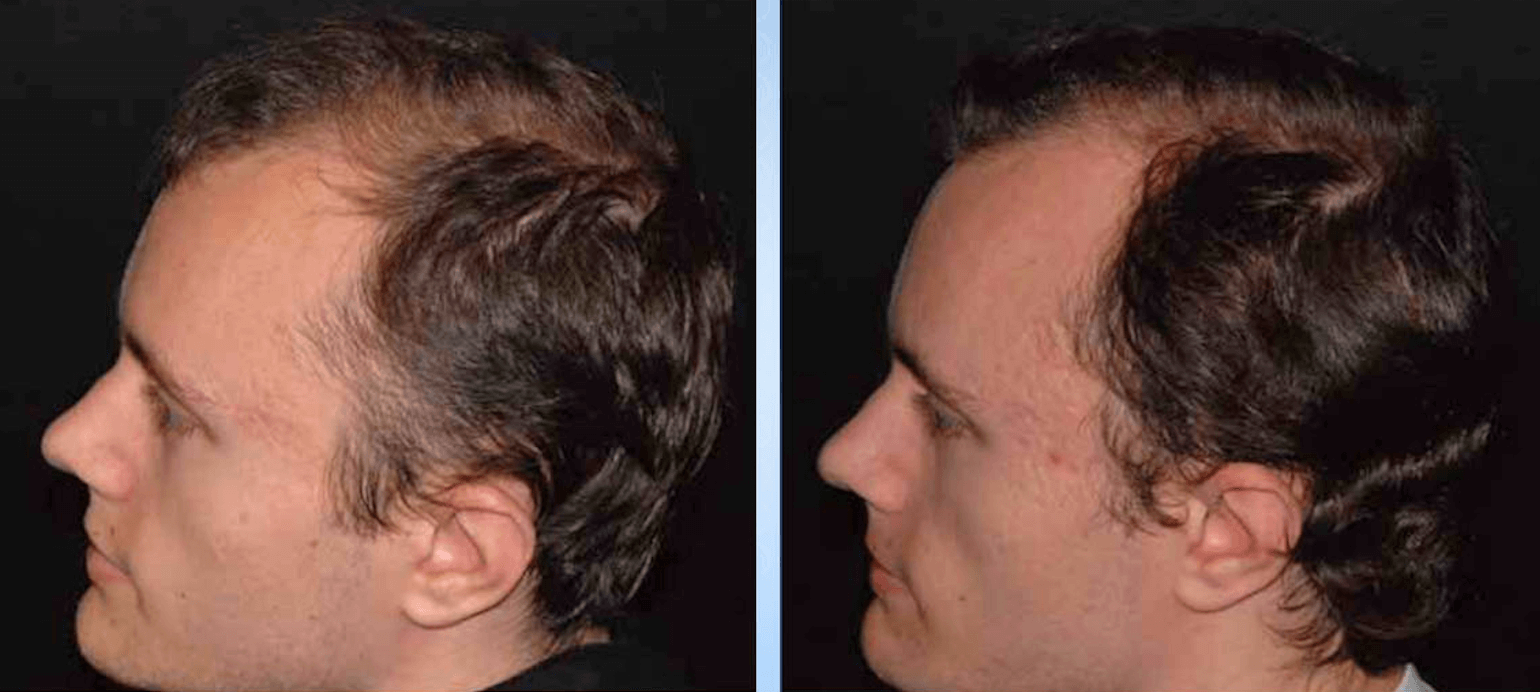
Hair loss is one of the most common concerns we see, and one of the most treatable — when the underlying cause is identified correctly. According to the American Hair Loss Association, roughly 35 million men and 21 million women in the United States experience hair loss. Here is how Dr. Susan Lin approaches it.
What is normal shedding — and what isn’t
Shedding is part of the normal hair cycle. It is considered normal to shed 100 to 150 strands per day. The problem begins when the body cannot replenish hair as quickly as it is lost. With age, that balance shifts, leading to gradual thinning, a receding hairline, or eventual baldness in men.
An important detail many patients don’t realize: by the time the scalp becomes visibly noticeable, more than 50% of hair density in that area may already be lost. This is why early evaluation matters so much — the window when follicles are still active is the window when treatment works best.
Why women’s hair loss is different
In women, hair loss can begin as early as the teenage years when there is hormonal imbalance, such as with polycystic ovarian syndrome (PCOS). Other common contributors include:
- Childbirth — postpartum shedding from hormonal shifts
- Anemia from heavy menstrual periods — low iron is a frequently missed cause
- Thyroid disorders and other medical conditions
- Significant stress or illness — which can push hair into a shedding phase
Rather than disappearing all at once, the hair shaft itself becomes thinner, making styles harder to hold. As a gynecologist with 35 years of experience, Dr. Lin is particularly attentive to the hormonal contributors in women.
Finding the cause before choosing a treatment
Hair loss is a symptom, not a diagnosis. An evaluation may include your medical history and, where appropriate, laboratory testing for iron (ferritin), thyroid function, and vitamin D. Treating the wrong cause wastes the months when hair is most recoverable.
Physician-led treatment options
- PRP (platelet-rich plasma) — uses your own platelets to release growth factors that support the follicle.
- Growth factor and exosome therapy — in our experience over 15 years, often achieving more in fewer sessions than PRP.
- Correcting deficiencies — addressing low iron or vitamin D where testing shows a genuine deficit.
- Scalp health and topical support — including the physician-formulated, drug-free MD® hair line.
Hair loss treatment plans start at $500 and are built around the underlying cause rather than a one-size-fits-all package.
Realistic expectations
Hair grows slowly. Even with a well-targeted plan, meaningfulimprovement in density typically takes several months of consistent treatment. Anyone promising results in weeks is not describing how hair biology works.
Frequently Asked Questions
How much hair loss per day is normal?
It is considered normal to shed 100 to 150 strands per day. Concern arises when the body cannot replenish hair as fast as it is shed, leading to visible thinning.
Why is my hair thinning as a woman?
Common contributors include hormonal imbalance such as PCOS, postpartum changes, anemia from heavy periods, and thyroid conditions. Testing helps identify which applies to you.
How long before hair loss treatment shows results?
Hair grows slowly. Meaningful improvement in density typically takes several months of consistent, physician-guided treatment.
Concerned about thinning hair or shedding? Every treatment at MD Laser and Cosmetics in San Mateo is performed personally by Dr. Susan Lin, M.D. Learn more or book a consultation.


