
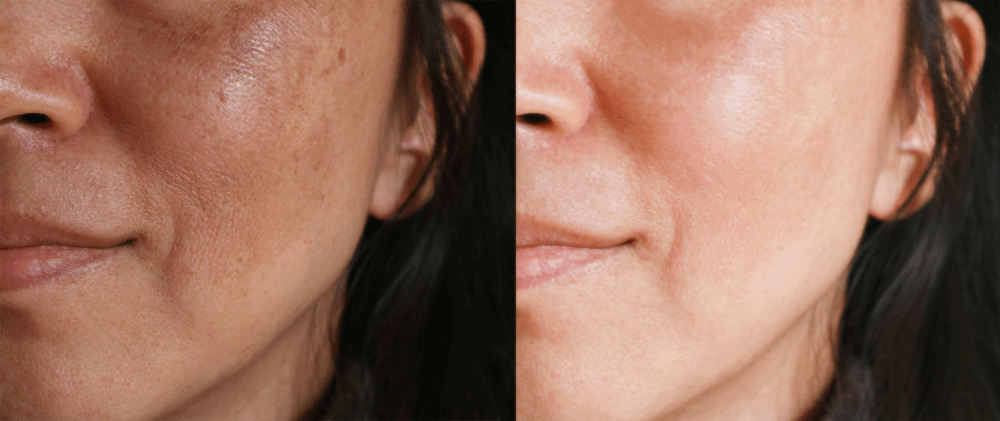
Melasma (brown or gray-brown patches, often on the cheeks, forehead, upper lip, or jawline) responds best to a combined, physician-led plan rather than a single product or procedure. At MD Laser & Cosmetics in San Mateo, Dr. Susan Lin, M.D. builds each plan around three tools — topical regimens, oral medication, and injectable treatment — chosen based on how deep the pigment sits in your skin, because using the wrong tool at the wrong depth can make melasma worse, not better.
Why Melasma Needs a Physician’s Assessment First
Melasma isn’t one condition with one fix. Dermatologists classify it as epidermal (pigment sitting near the skin’s surface), dermal (pigment deeper in the skin), or mixed — and a 2023 hospital-based study using Wood’s lamp examination found roughly 48% of cases were epidermal, 43% mixed, and 11% purely dermal [1]. This distinction matters because superficial treatments clear epidermal pigment well but often leave dermal pigment untouched, which is a major reason melasma “comes back” after a treatment that seemed to work at first.
San Mateo’s year-round sun exposure, hormonal factors, and heat all feed melasma, so before recommending any treatment, Dr. Lin evaluates where your pigment sits and what’s triggering it.
The Three-Pronged, Physician-Led Approach to Melasma
Most patients get the safest, most durable results from a combination of the following, tailored to their skin type and melasma depth:
1. Topical Regimens
Prescription-strength topical regimens (often built around hydroquinone, azelaic acid, tretinoin, or triple-combination creams) are the foundation of melasma treatment. They reduce pigment production at the source and are typically the first step before any procedure.
2. Oral Regimens
For more resistant melasma, Dr. Lin may add oral tranexamic acid to a topical regimen. A 2024 meta-analysis of randomized controlled trials found that adding oral tranexamic acid to standard triple-combination topical therapy significantly reduced melasma severity and recurrence compared to topical treatment alone, without increasing toxicity [2]. Oral regimens require a physician to screen for appropriate candidacy, which is one reason this option isn’t offered at non-medical spas.
3. Injectable Treatment
For select patients, intradermal (injectable) tranexamic acid microinjections deliver the medication directly into the affected skin. A systematic review found intradermal tranexamic acid to be a well-tolerated, effective option, with outcomes comparable to oral dosing in appropriately selected patients [3]. This is typically reserved for stubborn or recurrent melasma and is always performed by Dr. Lin, not delegated to an aesthetician.
Why Photofacial and Light-Based Treatments Can Backfire
IPL (photofacial) treatments can help some pigment and redness, but the research is clear on an important caveat: IPL has a documented risk of worsening melasma when the wavelength, fluence, or depth of treatment isn’t matched correctly to the patient’s skin and pigment type [4]. Because IPL penetrates broadly and generates heat in the skin, a treatment set at the wrong parameters can trigger more pigment production and post-inflammatory hyperpigmentation — leaving melasma darker than before treatment. This is why Dr. Lin evaluates candidacy carefully before offering any light-based treatment for a patient with active melasma, and why “photofacial for melasma” should only be done under physician supervision.
Why Superficial Lasers Like PicoSure May Not Be Enough
Picosecond lasers such as PicoSure are popular for pigment and can perform well on epidermal (superficial) melasma. But a systematic review and meta-analysis of picosecond laser treatment for melasma found results were highly variable, and outcomes were strongest when pigment was epidermal rather than dermal [5]. In practice, this means: if your melasma sits in the dermal layer, a superficial picosecond treatment alone is unlikely to clear it and may need to be paired with topical, oral, or injectable therapy for a meaningful result. This is exactly why an accurate depth assessment — not just booking “whatever laser is trending” — is the first step at MD Laser & Cosmetics.
Frequently Asked Questions About Melasma Treatment in San Mateo
Can melasma be cured permanently?
Melasma is usually managed rather than cured. With the right combination of topical, oral, and/or injectable treatment plus daily sun protection, most patients see significant, lasting improvement, but melasma can recur with sun exposure, heat, or hormonal changes.
How long does it take to see results?
Most patients begin seeing improvement within 8 to 12 weeks of starting a topical and/or oral regimen. Injectable and procedural treatments are typically added in a series over several months.
Is sunscreen really necessary if I’m already being treated?
Yes — daily broad-spectrum sunscreen is non-negotiable. Even minimal UV exposure can undo weeks of treatment progress, which is especially relevant in sunny San Mateo and the greater Bay Area.
Can I just get a laser treatment and skip the rest?
Not usually. Because most melasma is mixed or dermal in depth, laser or light treatment alone often under-treats the condition and, if done at the wrong settings, can worsen it. A physician-guided combination approach gives the most predictable results.
Related reading and treatments: Hyperpigmentation treatment in San Mateo · Medical-grade chemical peels · IPL photofacial (for sun spots, not active melasma). For daily maintenance between visits, Dr. Lin’s hydroquinone-free MD® Ultimate White Pad is designed to support a brighter, more even-looking skin tone.
Book a Physician-Led Melasma Consultation in San Mateo
Because melasma requires careful, individualized assessment, Dr. Susan Lin, M.D. personally evaluates each patient’s pigment depth and triggers before recommending treatment — whether that’s a topical regimen, oral tranexamic acid, injectable microinjections, or a carefully calibrated procedure. Book a pigmentation consultation in San Mateo.
References
- Hospital-based cross-sectional study of clinical and Wood’s lamp classification of melasma. Clinical Dermatology Review, 2023.
- Gonçalves OR, et al. Assessing the efficacy of oral tranexamic acid as an adjuvant to triple combination topical treatment in melasma: a meta-analysis of randomized controlled trials. Clinical and Experimental Dermatology, 2024.
- Intradermal tranexamic acid and melasma: a systematic review and level of evidence. PubMed, 2024.
- Efficacy of Intense Pulsed Light Treatment in Melasma. PubMed, 2024.
- Efficacy and safety of picosecond laser for the treatment of melasma: a systematic review and meta-analysis. PubMed, 2023.


